Return to Me

Today’s reading in my Lenten devotional contained this oh-so-basic but oh-so-vital truth. It is precisely relevant to the season of Lent but generally applicable to the whole pursuit of God:

The very first Scripture reading of the Lenten season is from the prophet Joel. In it, God declares “return to me with your whole heart” (2:12). The purpose of Lent is not purification and penance for their own sakes, but in order to return to God, and re-establish the relationship with Him that we once had (or to establish the relationship we are called to have).

How forgetful I can be.  No act considered spiritual is to be undertaken for any motivation beneath “returning to God with one’s whole heart”, yet how easy it is to be driven by the lesser desire to “measure up” or appear impressive, to others or ourselves.

This is one of the killers of spiritual life, sold to us by religion and rebellion alike. Lent leads such ego to the gallows. And when the noose tightens, our souls will be on the verge of entering life, perhaps for the first time.

For those with music as a primary language (perhaps all of us!), Gungor’s song “We Will Run” has always struck my ears and heart as particularly powerful in this simple call. An abbreviated version is below for any who need a “Gungor orientation” this morning.

Three Lent Voices

Here are three directions that you may head if you are looking for help in building or maintaining some “Lent focus” in this pre-Easter stretch:

Ann Voskamp shares experiences of how her fasting attempts are proving to be far more convicting than inspiring. And in the long run, that is a most life-giving gift.

In “The Wonder of Lent,” Margaret Feinberg speculates that the question, “What are you giving up for Lent?” is surpassed by another: “What do you hope to lay hold of during Lent?”

For Relevant Magazine, Caryn Rivadeneira shares “Why Ash Wednesday Matters”. This can serve a quick catch-up for those who are just realizing that the Easter “began” last week. (I recorded my first Ash Wednesday experience back HERE if you need a vicarious well to draw from.)


Lent is a Wilderness Season

Early in Luke’s gospel, he details the rise of John the Baptist’s public ministry.  His third chapter begins by rooting John in time by surrounding him with the “vital statistics” of his day:

1 In the fifteenth year of the reign of Tiberius Caesar, Pontius Pilate being governor of Judea, and Herod being tetrarch of Galilee, and his brother Philip tetrarch of the region of Ituraea and Trachonitis, and Lysanias tetrarch of Abilene, during the high priesthood of Annas and Caiaphas, the word of God came to John the son of Zechariah in the wilderness. And he went into all the region around the Jordan, proclaiming a baptism of repentance for the forgiveness of sins.

Most of these names mean little to today’s reader; most of these places are unknown. But in John’s (and Jesus’) day, these were the high rollers in the power centers. These were the figures writing the rules and making the waves.

And fascinatingly, God uses them as the background music for the scene that He is unfolding.

Into this time and place, God’s word arrived.

His message would inaugurate His move. And that word was delivered to a no-man in the no-man’s land: John in the wilderness.

Judean Wilderness

The wilderness of Scripture is the academy of the saints.

It was the scene of Moses’ leadership course in Midian, as Yahweh transformed an angry murderer into a surrendered deliverer. It was the venue for Israel’s forty-year shaping, which cost them an entire generation, on how to live as freed people in the Promised Land. It was also the setting for Jesus to be tested by the Adversary, ahead of his public ministry.

Luke depicts John the Baptist, also in the wilderness, seeking and listening.  The human eye can quickly glaze over at the vastness and blankness of the wilderness, and one small man in its midst can seem like dust.

Yet Luke, having sketched all the people and places where logic might expect Divinity to deliver His message, is explicit that this word is addressed to the simple one in the silent place: “The word of God came to John the son of Zechariah in the wilderness.”

Lent is a wilderness season.

It drives us into modes of reflection and recounting. We agree with God on the terms of full access that He might search us and freely reveal—even rebuke—whatever that He finds.  The wilderness, by its nature, is a refining environment. It swallows those who ill-equipped to dwell there. It silently pushes people toward precipices, where survival is uncertain.

Lent, by its nature, is the seeking of such an environment.  As did John, we place ourselves in a wilderness setting—via fasting or forgiving, reflecting or repenting—because we know that people who are at the ends of themselves, dwelling on the ends of the earth, are often those upon whom the life-giving word of God falls first.

My First Ash Wednesday

Ash WednesdayToday I attended my first Ash Wednesday service.

For a guy raised within a Christian heritage that paid minimal attention to the Christian calendar, this was noteworthy.

At a local Anglican Church, I joined a “crowd” of fewer than twenty. For a moment, I wondered if I was in the wrong place. The masses pour forth when the life of Easter is dished out; I suppose it is expected that discussions of dying will thin the crowd.

Service opened with this prayer together:

Almighty and everlasting God, You despise nothing You have made and forgive the sins of all who are penitent. Create and make in us new and contrite hearts, that we, worthily lamenting our sins and acknowledging our brokenness, may obtain of You, the God of all mercy, perfect remission and forgiveness; through Jesus Christ our Lord, who lives and reigns with You and the Holy Spirit, one God, for ever and ever.

Fire and Ashes

After further Scriptures and prayers, the priest shared a few thoughts. He highlighted the season of Lent as a time of spiritual cleansing, a period during which we make choices on how to create extra space: for God’s special arrival and for our sharpened attention.

In speaking of the ashes about to be smudged on each forehead, he pointed out that the upcoming Easter message of resurrection, by its nature, must be preceded by a message of death. Crosses comes before crowns, and fires come before ashes.  Steelmakers use repeated burnings to strengthen and solidify their metals. The blacksmith known as Yahweh subscribes to a similar strategy. People of faith are purged toward purity and hardened toward holiness through seasons of fire. To live out Lent is to willingly enter the flames. It is to mark oneself with ashes, convinced that every burn of self-death will be honored by the One in whom abundant life dwells.

All the Same

There is a beautiful solemnity in the imposition of ashes. The priest approached each of us, smudging (or “imposing) a dull black cross on our foreheads as he spoke one simple sentence, “From dust you came, and to dust you shall return.” I watched the first worshipers receive this moment, eyes closed or heads bowed or eyes locked on the priest’s. My turn came and went, and by the end of the semi-circle, all of us bore the mark of mortality. The woman to my right would likely dine at a soup kitchen later that day. The gentleman to my left was a federal judge from Ottawa, in town for the week. The priest himself had been marked by a church member. High and mighty, meek and meager–all lines are erased when dust and ashes are the theme. Most in the room wore silver hair that betrayed the fact that they were further from the dust-birth than I was, but charcoaled crosses now reminded that none of us knew who was closest to their dust-return.

One might take exception to the Ash Wednesday mantra. “I’m not just dust; the part of me that is really me isn’t that.”  True enough, but even the objection serves to highlight the point: None of us contain life. We do not generate it or guarantee it. There is One from whom it flows; He is its fountain and its founder.

And if the wearing of a greyed facial mark helps drill that in, then smudge up, my friends!

A Two-Word Spiritual Secret

prayer_0If God would answer any one prayer of yours, what would you ask for?

What if He gave it to you? Removed it for you? Placed you there? Granted your request?

How satisfying would that be? How fulfilling or relieving? How would you revel in the experience of God’s obvious blessing upon you?

In the past year of life, two words have come to be key in my understanding of how AND why God works in our lives. The words are SO THAT.

SoThat

Spoken another way, God works in YOUR life for way MORE than YOUR life.

Scripture attests to this.

abraham baby hope smallAbraham longed for a child, for an heir. And God responded, but not merely because Abraham’s possessions needed a landing spot after his death nor because Abraham and Sarah’s home would be happier, filled with the cooing and cuddling that an infant brings.  No, God spoke of all the nations receiving blessing through this longed-for child. He blessed Abraham SO THAT…
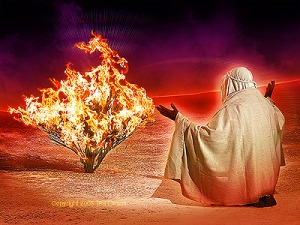
moses-and-the-burning-bush-the-bible-27076046-400-300Moses should have been a grateful man. Shrewd scheming by his mother and sister allowed him enough life to learn how to walk. Then compassion in the heart of an Egyptian princess entitled him to a privileged upbringing within the ruling house of an ancient superpower. All of this was far beyond earning; it appeared to gifted, for no obvious reason.

After you have been involved in an accident which resulted in these damages, you can file a lawsuit against the at-fault party’s insurance provider. What is punitive damages if the at-fault party did not have insurance, or could claim compensation by requesting a payout from your own insurance company.

Then surprisingly, a wilderness exile helped him escape a murder charge and enrolled him into a forty-year leadership course, under the tutelage of father-in-law Jethro, numerous sheep, and the patient instruction of the desert. And all of this appears to be kindness spent on Moses for his sake until a shrub ignites and the Sacred Infinity says otherwise: “Your life, Moses, has not been about your life. All of this has taken place SO THAT…

pentecost1The first disciples were terrified. Their leaders had crucified their Leader, and there was no telling how many of them were destined for similar fates. Drowning in despair and filled with fear, they locked themselves away to weather the storm. But the drama of an untimely death was about to be vaporized by the reality of resurrection. Appearing among his followers, Jesus provoked in them a reinterpretation of all they thought they knew. He then urged them to wait in Jerusalem for the further wonder of the Spirit. God made these moves in the lives of the inner circle, with His eyes beholding a whole lot more… than the inner circle.  Fire fell from heaven as more than an encouragement to Jesus’ friends. God was moving SO THAT…

By nature, our gaze is narrow. But the tightening of our focus upon ourselves actually serves to rob us, for the glory of what God is up to is typically brightest in the “SO THAT” seen far beyond the borders of our lives.

To be sure, God IS working in your life. But the more wonderful truth is that He is working in your life, not merely for your life. The Holy One is the master of the SO THAT!